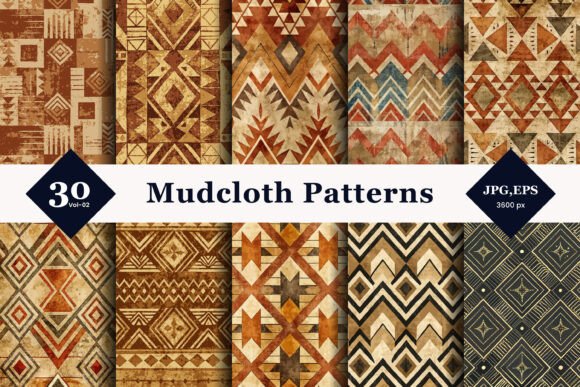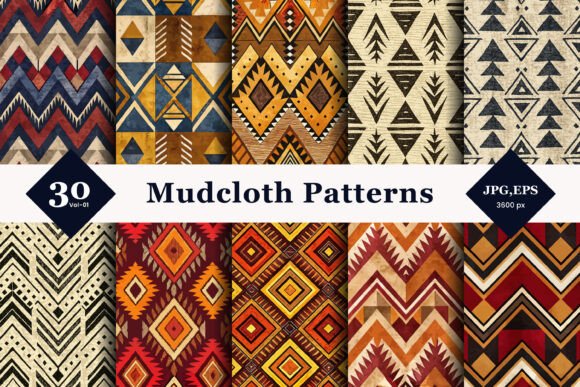
Mudcloth Style Seamless Patterns 01
Incorporating authentic cultural aesthetics into modern design projects requires more than just selecting a visually striking image. It demands an understanding of texture, repeatability, and technical precision. Mudcloth Style Seamless Patterns 01 offers a curated collection of 30 unique patterns inspired by traditional African artistry, specifically the Bogolanfini textile tradition from Mali. This resource is designed for professionals and hobbyists who seek to bring timeless elegance and sophisticated authenticity to their work, whether in fashion, interior decor, or digital media.
While the visual appeal of these designs is undeniable, many creators overlook the critical technical aspects of seamless pattern implementation. A pattern that looks beautiful as a static image often fails when tiled across a large surface area. This article explores how to maximize the value of this collection, avoid common pitfalls in pattern application, and ensure your final output matches the high quality of the source files.
Understanding the Value of Vector and Raster Formats
One of the most significant advantages of Mudcloth Style Seamless Patterns 01 is the dual-format availability. Each of the 30 patterns is provided in both EPS vector files and high-resolution JPG files (300 DPI). Understanding the distinction between these formats is crucial for achieving professional results.
- EPS Vector Files: These files allow for unlimited resizing without any loss of quality. If you are designing a billboard, a full-scale wallpaper, or a garment that requires precise cutting lines, vectors are essential. They maintain crisp edges and clean geometry regardless of scale.
- JPG High-Resolution Files: At 300 DPI, these images are print-ready for standard sizes such as fabric swatches, packaging inserts, or social media graphics. They offer immediate usability for quick mockups or web-based designs where file size management is a priority.
Common Mistake: Many beginners attempt to upscale low-resolution raster images to fit large prints. This results in pixelation, blurriness, and a loss of the intricate details that define mudcloth aesthetics. Always check the resolution before committing to a print run.
The Critical Importance of Seamless Tiling
A "seamless" pattern is not merely a repeating image; it is a mathematical alignment of edges so that the transition between tiles is invisible to the human eye. When applying Mudcloth Style Seamless Patterns 01, the integrity of the design relies on perfect edge matching.
Why This Matters: In textile design, a visible seam line can ruin the illusion of continuous fabric. In digital backgrounds, a broken tile creates a distracting grid effect that undermines the sophistication of the artwork. The 30 patterns in this collection are meticulously crafted to ensure smooth tiling, but improper implementation in design software can still break this continuity.
Better Approach: When importing these patterns into software like Adobe Illustrator or Photoshop, always use the "Pattern Make" or "Define Pattern" tools correctly. Preview your design at multiple scales. Zoom out to see if the repetition feels natural, and zoom in to ensure no artifacts appear at the tile boundaries. If you notice a hard line, adjust the offset settings or crop the edges slightly to hide the join.
Color Accuracy and Cultural Context
Mudcloth is traditionally created using fermented mud and plant dyes, resulting in a palette dominated by earthy blacks, browns, creams, and ochres. While Mudcloth Style Seamless Patterns 01 captures this essence, digital screens display color differently than physical materials.
Overlooked Detail: Designers often assume that the colors seen on a monitor will match the printed result exactly. However, RGB screen values differ significantly from CMYK print values. Additionally, the texture of the substrate (fabric, paper, or wall) affects how the pattern absorbs ink or dye.
Practical Advice:
- Proofing: Always request a physical proof before mass production. This allows you to assess how the mudcloth tones interact with your chosen material.
- Color Profiles: Ensure your design software is set to the correct color profile (e.g., SWOP for US printing, FOGRA for European printing) to minimize unexpected shifts in hue.
- Cultural Respect: Recognize that these patterns are rooted in specific cultural heritage. When using them for commercial products, consider adding context or credit to the inspiration source. This adds depth to your brand story and shows respect for the art form.
Selecting the Right Pattern for Your Project
With 30 unique options available, choosing the right pattern can be overwhelming. Not all mudcloth designs are suitable for every medium. The density, contrast, and complexity of each pattern influence its effectiveness in different contexts.
Fashion Design: For apparel, consider the scale of the pattern. Smaller, intricate motifs work well for dresses and accessories, while larger, bolder geometric shapes may be better suited for statement coats or home textiles like throw pillows.
Interior Decor: Wallpaper and upholstery require patterns that can handle large surfaces without becoming visually chaotic. Check the EPS files to analyze the repeat unit size. A smaller repeat unit allows for more flexibility in layout but may require careful planning to avoid monotony.
Digital Art & Marketing: For web banners or social media posts, simpler patterns with higher contrast tend to perform better. They remain legible on small mobile screens and do not distract from the primary message or product being showcased.
Technical Preparation for Download and Use
To ensure a smooth workflow, prepare your digital environment before downloading Mudcloth Style Seamless Patterns 01.
- Software Compatibility: Verify that your design software supports EPS and high-DPI JPG workflows. Most major platforms (Adobe Creative Cloud, Affinity Suite, CorelDRAW) handle these formats natively.
- File Organization: Create a dedicated folder structure for your assets. Separate the vector and raster versions to avoid confusion during the design process.
- Backup Strategies: Keep original, unedited copies of the downloaded patterns. Working on duplicates ensures you can revert to the source if adjustments go awry.
Maximizing Versatility Across Industries
The versatility of Mudcloth Style Seamless Patterns 01 extends beyond traditional design fields. Entrepreneurs and small business owners can leverage these patterns for branding elements, such as custom packaging, business cards, and website backgrounds. Educators can use them in teaching modules about global art history or textile design principles.
DIY Enthusiasts: Home decorators can use the high-resolution JPGs to create custom stencils for wall painting or to print on canvas for affordable art pieces. The instant download feature allows for rapid prototyping of ideas, enabling quick iterations based on client feedback or personal preference.
Cost Efficiency: By investing in a comprehensive pack like this, designers save time compared to sourcing individual patterns or creating original artwork from scratch. This efficiency translates to lower project costs and faster turnaround times, which is beneficial for freelancers and agencies managing tight deadlines.
Final Considerations for Quality Assurance
Before finalizing any project using these patterns, conduct a thorough quality check. Look for:
- Alignment: Ensure tiles connect seamlessly without gaps or overlaps.
- Resolution: Confirm that the output resolution meets the requirements of the intended medium (300 DPI for print, 72-150 DPI for web).
- Consistency: Check that colors and line weights remain consistent across the entire tiled area.
By paying attention to these details, you honor the craftsmanship of the original mudcloth tradition while delivering a polished, professional result. Mudcloth Style Seamless Patterns 01 provides the foundation; your expertise in application brings it to life.