Integrating Batik Style Seamless Patterns 01 into Professional Design Workflows
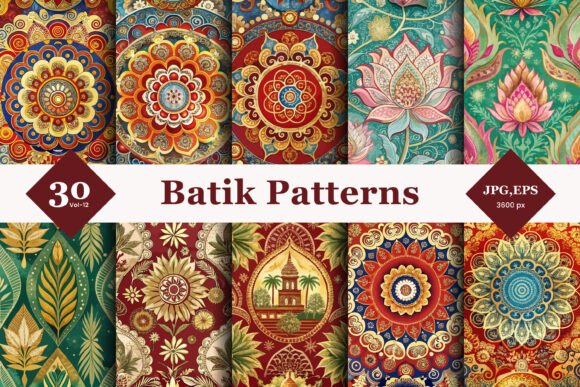
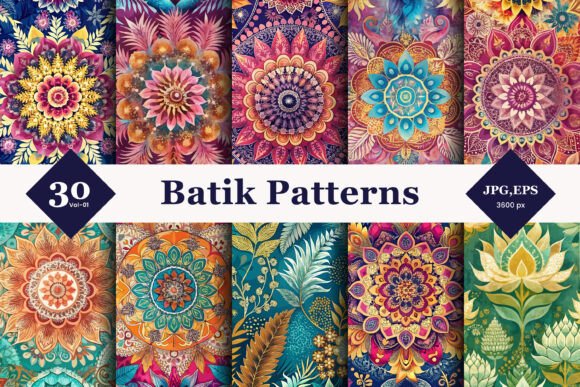
In the landscape of digital asset management and creative production, the difference between a functional design and a polished, market-ready product often lies in the quality and versatility of the underlying textures. For textile designers, packaging specialists, and digital artists, sourcing authentic visual elements that can be scaled without degradation is a critical step in the pre-production phase. Batik Style Seamless Patterns 01 represents a comprehensive solution for professionals seeking to incorporate genuine hand-drawn aesthetics into their workflows. This collection of 30 distinct designs bridges the gap between traditional artisanal techniques and modern digital scalability, offering a robust foundation for projects ranging from high-volume fabric printing to bespoke stationery.
The value of this asset set extends beyond mere visual appeal; it addresses specific technical requirements inherent in professional design pipelines. By providing both high-resolution raster files and scalable vector formats, the collection accommodates various stages of the creative process, from initial conceptualization to final file preparation for manufacturing. Understanding how these patterns interact with different software environments and output methods allows creators to streamline their operations, reduce revision cycles, and maintain consistency across multiple deliverables.
Understanding the Asset Structure and Technical Specifications
Before integrating any new resource into a project workflow, it is essential to evaluate its technical specifications against the demands of the intended application. Batik Style Seamless Patterns 01 is engineered to meet rigorous industry standards. The inclusion of 30 unique patterns ensures variety, allowing designers to select motifs that align precisely with brand identities or thematic requirements. These motifs are not generic clip art but intricate designs featuring florals, geometric shapes, and cultural symbols that mimic the organic irregularity of hand-drawn batik wax-resist dyeing.
The dual-format delivery system is a key component of its utility. The collection includes:
- High-Resolution JPGs at 300 DPI: These files are optimized for print-ready applications where immediate visual fidelity is required. A resolution of 300 dots per inch is the industry standard for offset and digital printing, ensuring that fine details in the batik motifs remain crisp and do not pixelate when viewed at close range. This format is particularly useful for quick mockups, social media graphics, and direct-to-garment printing previews.
- EPS Vector Files: For projects requiring infinite scalability, such as large-scale wall murals, billboard advertising, or custom fabric rolls, the EPS vectors are indispensable. Vectors allow designers to resize patterns without any loss of quality, enabling precise control over scale and repetition. This capability is crucial during the layout phase, where a pattern might need to be adjusted to fit specific dimensions of a package or garment panel.
This combination of formats supports a flexible workflow. A designer might begin a project using the JPGs for rapid prototyping and client presentations, then switch to the EPS files for final production, ensuring that the transition from concept to creation is seamless and error-free.
Workflow Integration Across Creative Disciplines
The application of Batik Style Seamless Patterns 01 varies depending on the discipline, but the underlying principles of integration remain consistent. Whether you are working in fashion, interior design, or graphic branding, the goal is to embed these patterns naturally into the final output while maintaining technical integrity.
Textile and Fashion Design
For fashion designers, the primary challenge with seamless patterns is managing the repeat unit. When applying batik-inspired designs to fabric, the seam lines must be invisible to the naked eye. The provided seamless tiles are designed to interlock perfectly, minimizing the need for extensive manual adjustment in software like Adobe Illustrator or Photoshop. In the pre-production stage, designers should test the repeat by tiling the pattern across a canvas larger than the final garment piece. This allows for the identification of any awkward breaks in the motif flow. Furthermore, because the EPS files are scalable, designers can experiment with scaling the pattern up or down to see how the density of the floral or geometric elements changes, affecting the overall drape and visual weight of the finished textile.
Packaging and Brand Identity
In packaging design, texture plays a significant role in perceived value. A box adorned with a subtle, high-quality batik pattern can convey heritage, craftsmanship, and luxury. Here, the workflow involves layering. Designers often use the patterns as background layers, adjusting opacity or blending modes to create depth. The 300 DPI JPGs are ideal for creating textured overlays in photo editing software, adding a tactile feel to digital mockups. When preparing files for print, it is vital to ensure that the vector files are embedded correctly to prevent resolution issues during the RIP (Raster Image Processor) stage. Consistency is key; using the same pattern set across a product line’s packaging creates a cohesive brand architecture that is recognizable on retail shelves.
Digital Art and Web Design
While web design typically favors lightweight assets, there are scenarios where rich textures enhance user experience. For instance, background textures for landing pages, email newsletters, or digital invitations benefit from the aesthetic warmth of batik motifs. However, file size optimization is critical here. While the source files are high-resolution, designers should export web-optimized versions (such as PNGs or compressed JPGs) for online use. The versatility of the EPS vectors allows for the creation of SVG (Scalable Vector Graphics) files, which are perfect for responsive web design. SVGs ensure that the patterns look sharp on high-density displays (Retina screens) without increasing bandwidth usage significantly. This approach balances aesthetic quality with performance efficiency.
Practical Implementation and Quality Control
Successfully incorporating Batik Style Seamless Patterns 01 into a project requires attention to detail during the implementation phase. One common pitfall is ignoring color profiles. Batik traditionally uses natural dyes, resulting in earthy, muted tones, but digital interpretations can vary widely. Before finalizing any design, ensure that your working color space (usually CMYK for print, RGB for digital) matches the intended output medium. Converting EPS files from RGB to CMYK can sometimes shift colors, so it is advisable to preview the patterns in the correct color profile early in the process.
Organization is another factor that impacts efficiency. With 30 distinct patterns, keeping track of which motif is used for which project element can become chaotic. A best practice is to create a dedicated library folder structure within your design software. Tagging assets with metadata related to their style (e.g., "floral," "geometric," "ethno") allows for quicker retrieval during future projects. Additionally, documenting the scale at which each pattern was originally created helps maintain consistency if the same pattern is reused in different contexts.
Quality control should also involve testing the pattern’s behavior under different conditions. For physical products, always request a physical proof before full-scale production. Digital artifacts, such as aliasing or unintended color banding, may only become visible in hard copy. The high-resolution nature of the included JPGs minimizes these risks, but verifying the output on actual materials—whether it is cotton, paper, or cardstock—is the only way to guarantee satisfaction.
Long-Term Value and Versatility
The investment in a comprehensive asset pack like Batik Style Seamless Patterns 01 offers long-term benefits for creative professionals. Unlike temporary trends, batik aesthetics have enduring appeal, rooted in cultural history and artistic tradition. This timelessness makes the patterns suitable for evergreen content and classic brand identities. Moreover, the instant download nature of the product allows for immediate access, reducing lead times and enabling agile responses to client requests or market opportunities.
As design tools continue to evolve, the ability to work with scalable, high-fidelity assets becomes increasingly important. The EPS vectors in this collection are compatible with virtually all major design platforms, including Adobe Creative Cloud, Affinity Suite, and CorelDRAW. This compatibility ensures that the assets remain usable regardless of software updates or changes in team preferences. By integrating these patterns into your standard toolkit, you enhance your capacity to deliver diverse, high-quality work efficiently, positioning yourself as a versatile and reliable creator in a competitive market.
Ultimately, the success of using Batik Style Seamless Patterns 01 depends on thoughtful application. It is not merely about placing a pretty image on a canvas; it is about understanding how texture, scale, and color interact within a broader design system. By respecting the technical specifications and planning the integration carefully, designers can leverage these authentic motifs to create compelling, professional-grade outcomes that resonate with audiences and stand the test of time.