Funky Retro Paisley Patterns: Integrating Vintage Aesthetics into Modern Creative Workflows
In the landscape of digital design and craft production, visual consistency is often the difference between a disjointed project and a cohesive brand identity. For creators ranging from freelance graphic designers to small business owners managing their own social media or product lines, sourcing high-quality background assets is a critical step in the pre-production phase. This is where specialized assets like the Funky Retro Paisley Patterns become more than just decorative elements; they serve as foundational textures that can elevate the perceived value of a final output.
The Paisley Digital Paper Bundle offers a structured solution for this need, providing ten seamless patterns designed for immediate integration into various workflows. By understanding how these assets function within a broader creative process—from initial concept to final export—users can streamline their production cycles and maintain high standards of quality control without sacrificing aesthetic appeal.
Understanding the Asset Structure and Technical Specifications
Before integrating any digital asset into a professional workflow, it is essential to verify its technical compatibility with your existing software stack and output requirements. The Funky Retro Paisley Patterns bundle is engineered with specific parameters that cater to both digital display and physical print production, reducing the friction typically associated with asset conversion.
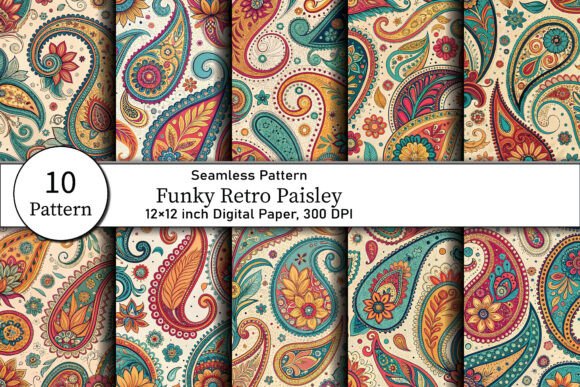
The bundle includes ten distinct PNG and JPG files, each rendered at a high resolution of 300 DPI. This resolution standard is crucial for print-on-demand services, sublimation projects, and high-quality paper crafts, ensuring that the intricate details of the paisley design remain sharp and free from pixelation when scaled. The dimensions are standardized at 12 x 12 inches (305 x 305 mm), which corresponds to 3600 x 3600 pixels. This square format is particularly advantageous for scrapbooking layouts, Instagram posts, and square-format packaging designs.
- Format Versatility: The inclusion of both PNG and JPG formats allows users to choose based on their layering needs. PNGs preserve transparency if needed, while JPGs offer smaller file sizes for web-based backgrounds.
- Seamless Tiling: A key feature of these patterns is their ability to tile seamlessly. This means that when used as a fill pattern in software like Adobe Illustrator, Photoshop, or Canva, the edges align perfectly, allowing for infinite expansion beyond the original 12x12 inch canvas.
- No Watermarks: For commercial use cases, such as selling printed goods or client deliverables, the absence of watermarks is a significant efficiency booster. It eliminates the need for post-processing cleanup, saving time during the execution phase.
Integrating Paisley Patterns into Pre-Production Planning
Effective project management begins with organization. When incorporating the Funky Retro Paisley Patterns into a project, the first step is often strategic selection rather than immediate application. Because the bundle contains ten unique variations, creators should curate a subset that aligns with the specific color palette and mood of the current project.
For example, a marketer designing a seasonal campaign might select three patterns that share complementary hues to create a unified look across email headers, blog featured images, and social media banners. By organizing these assets into dedicated folders labeled by theme or color tone, teams can reduce decision fatigue during the design sprint. This preparation phase ensures that when the actual design work begins, the necessary resources are readily accessible, maintaining momentum and focus.
Furthermore, understanding the "vibe" of retro paisley allows for better alignment with target audiences. The funky, intricate nature of these patterns appeals to demographics that appreciate nostalgia, craftsmanship, and bold aesthetics. Educators creating engaging classroom materials or bloggers writing about vintage fashion can leverage this inherent appeal to capture attention quickly, using the patterns as visual anchors that communicate style before the reader even processes the text.
Execution Strategies for Digital and Print Workflows
Once the assets are selected and organized, the execution phase involves placing these patterns into the intended medium. The versatility of the Paisley Digital Paper Bundle allows it to interact seamlessly with a variety of tools and platforms.
Digital Backgrounds and Web Design
In digital environments, large flat colors can sometimes feel sterile. Using a paisley pattern as a subtle background texture adds depth and interest without overwhelming the primary content. When applying these patterns in web design or presentation software, it is advisable to adjust the opacity or blend mode. Lowering the opacity allows text and call-to-action buttons to remain legible while still benefiting from the rich visual texture provided by the retro design. This technique enhances user experience by making interfaces feel more tactile and inviting.
Print Production and Sublimation
For entrepreneurs involved in print-on-demand businesses, the 300 DPI resolution of these files is a critical asset. Whether creating custom wrapping paper, greeting cards, or fabric prints via sublimation, the high fidelity of the image ensures that the final product matches the digital preview. When preparing files for printing, ensure that the document size is set correctly to avoid unnecessary scaling. If a larger print area is required, the seamless nature of the pattern allows you to duplicate the tile multiple times in your layout software to cover the entire surface area without visible seams.
Scrapbooking and DIY Crafts
Hobbyists and crafters often use digital papers to create printable templates for physical scrapbooks. The 12x12 inch dimension is the industry standard for scrapbooking pages, meaning these files can be printed directly onto cardstock or photo paper with minimal cropping or adjustment. This direct compatibility reduces material waste and simplifies the crafting process. Users can layer these paisley backgrounds with photos, journaling cards, and embellishments to create personalized keepsakes that stand out due to their vibrant and classic aesthetic.
Quality Control and Long-Term Asset Management
Sustainable creative workflows rely on the longevity and reusability of assets. Unlike temporary stock images that may expire or change licensing terms, owning a bundle like the Paisley Digital Paper Bundle provides perpetual access. To maximize the return on this investment, creators should implement a robust file management system.
Consider tagging your digital assets with metadata related to their potential use cases, such as "retro," "vintage," "background," or "seamless." This makes future retrieval effortless, whether you are working on a project today or revisiting an old idea years later. Additionally, keeping backup copies of these high-resolution files in cloud storage ensures that you never lose access to your core design elements due to hardware failure.
Consistency is also key in brand building. By repeatedly using the same or similar paisley patterns across different products or campaigns, you create a recognizable visual signature. Over time, this repetition builds brand equity, as customers begin to associate the distinctive retro aesthetic with your specific style or business. This is particularly effective for small business owners who want to differentiate themselves in crowded markets like Etsy or independent publishing.
Conclusion: Streamlining Creativity with Purposeful Assets
The Funky Retro Paisley Patterns are not merely decorative add-ons; they are functional components of a modern creative toolkit. By leveraging their high resolution, seamless tiling capabilities, and versatile formats, professionals and hobbyists alike can enhance the quality and efficiency of their projects. From planning and organization to execution in digital or print media, these assets provide a reliable foundation for producing visually compelling work. Integrating them into your workflow allows you to focus less on sourcing basic textures and more on the strategic storytelling and design decisions that drive results.